At 26, her financial situation looked completely out of control.
Multiple credit card bills.
Personal loan EMIs.
Buy now pay later payments.
Constant stress every month before salary day.
From the outside, everything looked normal.
She still went to work every day.
Still met friends occasionally.
Still posted happy moments online.
But privately, the pressure was becoming unbearable.
What changed her life wasn’t a sudden salary increase or a lucky opportunity.
It was one surprisingly simple strategy.
The Debt Kept Growing Quietly
Like many young professionals, her debt didn’t appear overnight.
It started small.
A credit card purchase here.
A vacation EMI there.
A few online shopping orders.
A personal loan during an emergency.
Individually, none of it felt dangerous.
But over time, the monthly payments began stacking up faster than her income could handle.
Soon, a large portion of her salary disappeared before the month even started.
That’s when the anxiety began.
The Turning Point Came One Night
One evening, she finally calculated the total amount she owed.
Until that moment, she had avoided looking at the actual number.
When she finally added everything together, the result shocked her.
For the first time, she realized the real problem wasn’t low income.
It was lack of control.
That night became a turning point.
Instead of avoiding the situation emotionally, she decided to face it mathematically.
Her Strategy Was Surprisingly Simple
She didn’t use complicated financial systems.
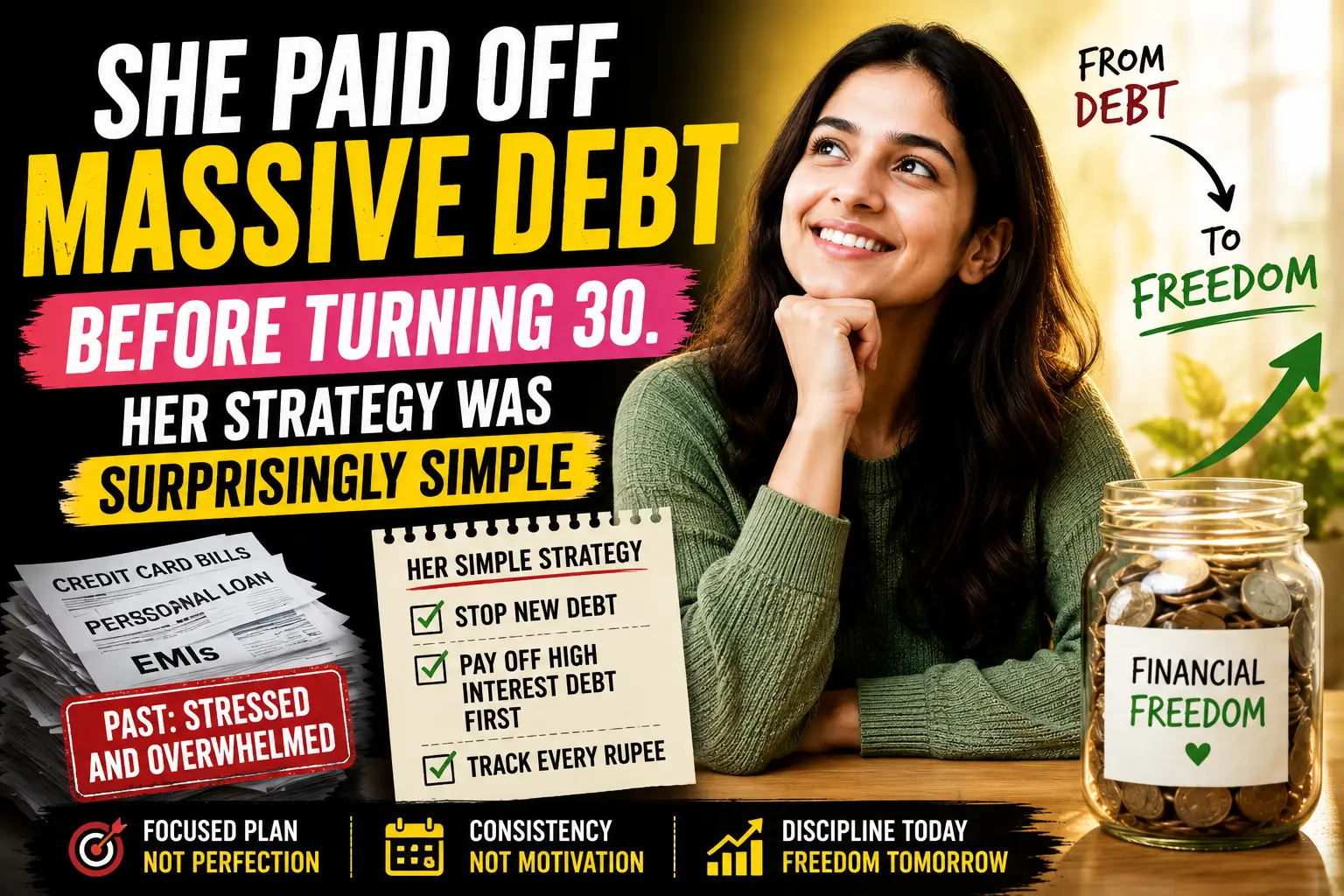
She followed three simple rules:
• stop creating new debt
• aggressively pay off the highest interest balances first
• track every rupee leaving her account
That’s it.
No magical investment hacks.
No overnight solutions.
No unrealistic budgeting challenges.
Just consistent financial discipline repeated month after month.
She Started Cutting Invisible Expenses
The biggest surprise wasn’t her large expenses.
It was the small recurring ones.
Food delivery.
Unused subscriptions.
Impulse shopping.
Weekend spending.
Lifestyle upgrades she didn’t actually need.
Individually, they felt harmless.
Combined, they were destroying her financial progress.
Once she became aware of those patterns, everything started changing.
The First Few Months Felt Slow
At the beginning, progress felt painfully small.
Even after months of discipline, the debt still looked massive.
That’s the stage where most people quit.
But she stayed consistent.
Every closed loan account became motivation.
Every reduced EMI created momentum.
Slowly, the financial pressure started decreasing.
Then something unexpected happened:
She began feeling mentally lighter too.
The Psychological Shift Changed Everything
Debt isn’t only financial.
It’s emotional.
Constant debt creates:
• stress
• guilt
• anxiety
• sleep problems
• fear about the future
As her debt reduced, her confidence slowly returned.
For the first time in years, she stopped feeling trapped by money.
That psychological freedom became even more valuable than the numbers themselves.
She Increased Payments Whenever Income Increased
Instead of upgrading her lifestyle after salary hikes, she upgraded her debt payments.
That decision accelerated everything.
While many people increase spending as income rises, she stayed focused on one goal:
Financial freedom before 30.
That short term sacrifice created long term stability.
The Most Important Lesson From Her Story
Her journey proves something most people ignore:
Debt rarely disappears through motivation alone.
It disappears through systems and consistency.
Most financial transformations are not dramatic.
They’re built through small, repetitive decisions made over long periods of time.
Not glamorous moments.
Just discipline.
Final Thoughts
Before turning 30, she achieved something many people spend decades struggling with:
She regained control of her financial life.
Not because she became rich overnight.
But because she stopped ignoring the problem and started confronting it directly.
Her story is a reminder that financial recovery doesn’t always begin with earning more money.
Sometimes, it begins with one honest decision:
To finally take control.